Order a Reading

Showing posts with label Book Review. Show all posts

Monday, 29 August 2016

Book Review -- The Oracle Travels Light

It's no secret that I've been influenced by Camelia Elias's first book, Marseille Tarot: Towards the Art of Reading, which has garnered mixed reactions; some tarot readers love it and some write that they as much as pitched it directly into the trash bin. Her second book, The Oracle Travels Light: Principles of Magic with Cards seems to be as much a spoonful of Marmite to its readers as that first one. Those who love it tend to write things like this:

'This is a book for those who would risk a finger at the loom of the Weavers...This book is a stick of dynamite disguised as a cigar waiting to be lit with three matches from the hand of a dead man.' Aiden Watcher

'With this butterfly in my gun, I feel I might never again miss my mark.' Atticus Hob

'For those who don't mind walking into the forest of the mind and striking a match, this fire will keep you warm for your whole life long.' Caitlin Matthews

This resorting to metaphoric language goes a long way to showing you what the book is like. The following reviewer, who gave the book 5 stars, begins to touch upon one of my problems with it: 

'This one feels scholarly, yes, but, also muddy and sticky, like the shaman as she imparts the secret knowledge as she is rising from the swamp. The book itself is a potent spell well crafted.' Charles Webb

Even this guy, in trying to explain what it's like wading through the prose style and content of The Oracle Travels Light, has to use metaphoric language.

One confused reviewer says: 'Not sure if the book could use some better organisation, or if the less linear structure is part of the intended delivery. But there's gold in them wandering pathways.' Joe Crow (Another metaphor!)

Not everyone has been caught by its Marmite charms, though, such as these reviewers:

'One of the most self-obsessed and myopic books on magic I've ever read.'  James Kennedy

'Don't waste your money on this one. Had a look at it and threw it in the bin.' Wordery

I've spent a lot of time thinking about what I want to say about this book and how to say it. That's because there is some good material here that deserves to be considered, and because Elias demonstrates how seamlessly and organically the cards and magic can (and ought to) be integrated into daily life. Those are the good points. But also, there's no escaping the fact that this book is written in a dense, highly frustrating, stilted prose style, and there is a relentless subtextual thread which might reflect a personal war with a religious milieu, in frequent mentions of defying 'cultural dictations' and rather defiant see-how-naughty-I-am-because-I-practice-magic references to the Devil and the Devil card. These start to distract and annoy early on and they don't let up.

So let's just start with what I didn't liked

1. The prose style. It is dense and unlovely. Occasionally unintelligible.

2. All this banging on about being outside cultural norms and expectations. Anyone practicing magic already knows damn well they're outside the box. Why the gloating? This contempt for the 'norm' glares in a sample reading near the end of the book. It is for a man who wants to know if his friend has 'gone too conservative after marriage' to 'the prototype of the Danish woman, for whom everything is a project, including husband, children, the job, the house and the dog.' Elias writes: 'Yack. While listening to more uncomfortable notions about the dangers of life based on the status quo ideals... I laid down three cards, and the horror, the horror.' A good unbiased start, then.  Elias next details the reading which confirms both her and her client's contempt for conventional life, and ends with the client's feedback that his friend had phoned to tell him that he is happy. Elias isn't buying it: 'We could ask Freud what he would make of this demonstrative act of enunciation that discloses the poverty in inauthentic living: if you have to say you are (happy, rich, content, powerful) you aren't.' She then mentions how useful it is to be neutral in a reading and caps the story with this puzzler: 'As it is fantasy that rules the mytho-poetic act, our magic gets strengthened by the flow of speaking creatures, instructing us in the art of graceful deliverance.' Believe me, that sentence is no easier to interpret in the context of the entire chapter than it is here in isolation in this review. (See point 1).

3. Outright dismissal of the right hand path. In a chapter called 'The Paths of Magic,' Elias declares that only those who follow a left hand path live an authentic life, while right handers conform to what is acceptable to the masses. She confirms this for herself in a reading. For the left hand path, she draws The Pope, Justice and The Devil. For the right hand path, Lovers, Magician and Judgement. She gives the following reading, which I give in its entirety, because I found it so thoroughly offensive to light workers:
Here it becomes crucial to understand what the sorceress wants to begin with: To be in cahoots with the Devil, and do what there is to be done in terms of pacts and bonds, or to mediate relations between the ambivalent subject (herself included) and the public?
Whereas the Devil invites us to the underworld, asking us to start with confronting our own demons, the Angel says "all rise, let us now hear the news."
Whereas in the first example we clearly have a situation that requires a complete cut (Justice) with the dogma of the mainstream church (Pope), and entering into formal submission to the Lord of Darkness (Justice + Devil), the second example demonstrates a need to rise above the very idea of choice (Lovers) by tricking oneself (Magician) into believing that the sharing of higher learning is possible (Judgement). 
Whereas in the first example, describing the lefthand path, we are asked to consider giving up a pound of our own flesh and blood in exchange for magical knowledge (Justice cuts and weighs), the second example, for the right hand path, shows us that we are dependent upon the community to acknowledge our magic. Moreover here, as the Magician is looking at the options on his table, we are meant to understand that he may not be aware of how much of that doubting of himself he ends up carrying into the new world.  
Whereas the first example may involve working with necromancy, the ancestors, or the spirit of the telluric forces, the last example emphasises working with celestial forces as received by the larger group. If the first example shows us the transmission of personal gnosis, the price being going down, the second example shows us the transmission of group mentality, the price being having to listen up.

She then caps with this zinger: 'Why is working with the 'Devil' condemned, while working with the 'Angel' is consecrated? Which camp do I want to be in? The winners or the losers?' She calls this a  'transgressive lunch' (your guess is as good as mine!) and says 'good folks have been burned for a lot less than this discussion here.' Tiresome.

But here's what I really liked

1. Magic in the day-to-day. Elias tells many stories about how she sees magic all around, by making connections. On a day when she is thinking about her father and a person she admires, two crows appear and follow her. She names them after the two she is thinking of. Then later, she finds two white eggs in a carton of 12 and feels it's another sign from the pair. She tells a story of a friend who years ago promised her a gift sending her a Tibetan bowl just as she is deliberating over whether or not she should buy a Tibetan bowl. Do these stories prove anything? 'They prove nothing,' she writes. 'But what they do is tell us what we can make of the way in which we interact with the world. By letting ourselves be enchanted with how things come to us, or with what happens when we point our index finger at someone or something, we get a sense of what it means to be alive beyond the blood pulsing through our veins.'

2. Magic in ourselves. In a chapter called 'Necromancy,' Elias tells a wonderful story about a night when she and her sister decide to do some magic to try to 'uncover an annoying family secret'. They draw cards at random based on images seen by her sister in a crystal ball, and try out an array of magical techniques to coax the truth from the ancestors, who toy with them but in the end refuse to reveal anything. It is such a wonderful example of spontaneous, organic use of magical techniques and cards, and also the magical partnership between the sisters. They are playful and good-humoured through the experience, through the chills and rising hair, and finally give up, spill libations and go off to bed. The story is as much about Elias's relationship with her sister and the magical experience itself as it is about magical technique. Actually more so. We don't receive any instruction as to how to do any of this. The idea is just to do it, enjoy it. 'The point of the story here is to emphasise the very pragmatic scope of any magical working beyond its intended function, which, in my case, is the sheer pleasure of enjoying the company of my sister without having to go through the banality of recounting frustrations related to the reality of our 'normal' lives...In our encounters we have found that raving about our achievements, or those of our loved ones, is only interesting for about three seconds. Hence, we have long since realised that the best of ourselves together is found in our letting sacred objects not only mediate between us, but also inform our gatherings. Nothing really compares to the work of blessing our own treading on this planet, and making recourse to unusual practical magical behaviour that enhances our awareness of alternative modes of viewing the world. A community of two can work marvels.' In the margin next to this, I've translated it: 'Magic is more fun than small talk.'

3. Magic in the cards. The cards and your magic practice can be as natural as breathing. Elias tells a story about being anxious about her sister driving on her own through the countryside to Norway. She turns directly to the cards and draws Chariot, Tower, Temperance. She creates an impromptu spell and tells her sister, 'Take the Temperance card from the pack and enchant it with words of power for protection on the road and balanced driving.' Her sister does have an accident but is unhurt. Elias finds out her sister never did take a card or speak words of power over it. However, Elias believes that 'the thought of it counted enough' to allow her sister to arrive unharmed. I find stories like this endlessly fascinating. Our thoughts affect reality. Magic is anything that helps us direct and focus how our thoughts are affecting reality.  I have no doubt on this point. (This draw could also have been read: You are worried about your sister having a car wreck, but don't be. You can trust that it will all come out in the wash. :D )

Despite its frustrations, I believe this book is worth reading. I've read it three times. I've dipped into it many more times than that -- I've been chewing this book over since February. The margins are filled with my outraged or delighted scribblings. We have a love/hate vibe. That in itself makes it pretty magical to me.

Saturday, 24 October 2015

Never the Twain? Wen and Elias -- Book Review(s)


I bought Holistic Tarot by Benebell Wen in July, right after the TABI Conference. I have more or less pored over it ever since. It is a massive tome of 874 pages of tarot scholarship. I thought I may have found the definitive tarot source book, and without doubt it is on its way to the status of a classic introduction to various esoteric traditions and  the contemporary approach. It's certainly a compendium of all sorts of esoteric and occult traditions, a comprehensive introduction with much to offer experienced readers as well. But over the last week, I've read Camelia Elias's Marseille Tarot: Toward the Art of Reading. A slim book of 197 pages, as a guide to reading the cards,  it knocks Holistic Tarot into a cocked hat. While the carefully researched tables of information in Holistic Tarot appeal to my Virgo side, the philosophy of reading espoused in Marseille Tarot thrilled me to the tips of my ten toes. While reading this book, I have laughed out loud, frowned in consternation, and felt my eyebrows shoot up in shock. I've underlined, drawn arrows, and written in the margins on nearly every page! Wen's book is a tremendous resource. Elias's book I simply love. And you couldn't get two more diametrically opposed approaches. Here are a few of the more glaring examples:

What is a tarot reading?

Wen - "I do not support fortune telling and I do not believe in future telling. The signs and symbols of the cards facilitate retrieval of information from the unconscious and move it to the forefront of the conscious plane of the mind."

Elias - (Refers to self throughout as a fortune teller) "In classic cartomancy, we don't read the cards according to esoteric principles. We read the cards according to common sense. The cards are like a language rather than a symbol. [Tarot] is most efficient precisely in the moment when we give up symbolism and esoteric knowledge."

How is a reading delivered?

Wen -- Presents an elaborate 8 step process which includes the First Operation and involves explaining individual card meanings at least 10 times (see pages 478-479 of Holistic Tarot). Here is a sample reading from Wen:


(It's worth noting that this is a general enquiry, no question asked.) 


Elias -- "I often say that I'm not an 'intuitive reader' --whatever that means -- but rather a reader who has trained herself in the art of 1) distilling the primary meanings of the cards, 2)essentializing these meanings to a core understanding and ultimately 3) synthesizing these primary meanings into one relevant shot. In Romania where I grew up, most card readers I've seen have been versed in delivering the one sentence reading without needing 30 minutes for a tarot session."  From Elias (question in middle of page on left, entire reading is at top of page on right):


(Take note that there is a question here. Elias doesn't do general readings. "I never read the cards without a question. The question is crucial for the level of precision that we end up delivering when we read the cards. ...If the cards address the querent's issues in a very direct manner, then they do so because there is a question to begin with.")

What about ethics?

Wen -- "The purpose of the tarot is to empower the Seeker, never to harm. ...Generally, tarot practitioners should never agree to do readings for Seekers who are asking specific questions about illness, financial troubles, legal troubles, or abuse of any kind. That is unacceptable. ...The ethical reader will not facilitate such situations. The tarot should only be used to complement current professional care."

Elias -- "The querent has ultimate agency, and my work is always based on fundamental trust. If a person comes to me for advice, I trust the person to be able to reflect on what we're talking about. ...The reader is not responsible for people's feelings, for what people make of a reading, or for what they get out of it. The reader is responsible for delivering a useful statement, and for staying on track and true to the cards."

In summary

These two books present a fascinating view of different personalities, different traditions and different approaches to tarot reading. Wen is deeply immersed in esoteric details and gives page after page of charts, diagrams and tables from astrology, numerology, and the writings of occultists. She espouses tarot reading as a sort of coaching or active listening, with strict ethical rules of the boundaries and responsibilities of the tarot reader. Elias comes from a fortune teller tradition and approaches reading by following patterns appearing in the pictures on the cards and weaving the images into a story. She assigns 'ultimate agency' to the querent and accepts no responsibility for their reactions to the reading or their resulting action (or inaction). Being true to the story she sees in the card trumps other considerations.

Both writers agree that the purpose of a tarot reading is to help the querent to see their situation more clearly and make their own decisions about next steps to take.

I have certainly enjoyed reading both books...but a fire wasn't lit under me until I read Elias. So thanks for that, Camelia.

(Please note quotations from the books are sentences compiled from different pages; breaks are noted by an ellipsis.)

Benebell Wen's website benebellwen.com offers plenty of free resources and  blog. 
Camelia Elias's site Taroflexions is also filled with information and blog.
Both are well worth a visit! 


Sunday, 1 February 2015

Book Review: The Holy by Daniel Quinn

The Holy: A Novel by Daniel Quinn

One of the great things about surprises is ... they're a surprise. I recently had a birthday, and was delighted to receive a gift in the mail from a friend. One of the items in the parcel was this curious novel by Daniel Quinn.

I have to admit I had never heard of Daniel Quinn. His books Ishmael, The Story of B and My Ishmael form a trilogy that seems to have been quite influential in the 1990s. Ishmael apparently won the Turner Fellowship of Tomorrow Award (which I hadn't heard of) and inspired a Pearl Jam song 'Ishmael' (which I'd never heard). Everything about this book and its author constituted a surprise for me, then!

I was even more surprised when I opened the book to the title page and saw this:


Monday, 29 September 2014

Book Review - Chakra Wisdom Toolkit by Tori Hartman


Chakra Wisdom Oracle Toolkit: A 52 Week Journey of Self-Discovery with the Lost Fables 
Tori Hartman (Watkins Publishing, 2014)

Back in May I reviewed an oracle deck called Chakra Wisdom by Tori Hartman  and then ran a giveaway for the deck (Congratulations, Delphine Sutherland!). The publisher has sent me a sold-separately companion book to review. Here are my thoughts.

Sunday, 8 December 2013

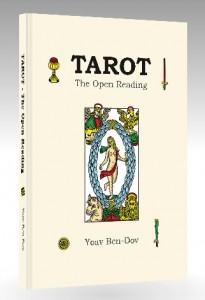
Book and Deck Review | Tarot: The Open Reading and CBD Tarot de Marseille

I haven't had much dealing with the Tarot de Marseille, and the main reason is that I think the majors and courts are, to be frank, extremely ugly. And yet, I find the pip cards gloriously beautiful, and so I keep finding myself drawn to the deck. I do love unillustrated minor cards (or 'pips only' cards, as I like to call them), and the TdM pips are wonderful, particularly the swords suit, with its amazing curving shapes,and the coins, with all those scrolling vines and leaves twining around the disks. If it weren't for those god-awful majors...

A few years ago someone gave me the Jean Noblet TdM. I tried to like it but I just couldn't get into it, and it was considered such a special deck that I felt bad about it sitting ignored in my collection, so I traded it. (I can't even remember what I traded it for now, but chances are that deck, too, has been traded or sold, because I do ruthlessly cull my collection of decks.) The only reason I bought the my current TdM is because I read about it on Facebook (darn you, Facebook!) and thought I ought to have one TdM that is considered 'correct' -- whatever that may mean. I trust those who know better than me in that regard. (You, Caitlin Matthews!)

Which brings me round to today's post, a review of the CBD Tarot de Marseille (Yoav ben Dov, 2010) and the companion book, Tarot: The Open Reading (sold separately). The full title of the deck is 'CBD Tarot de Marseille: A faithful reproduction of the traditional Tarot based on the standard deck printed by Nicholas Conver 1760, restored and adapted by Yoav Ben Dov.' I just call it 'CBD Tarot', which is an acronym for 'Conver-Ben Dov'.

The Deck
Ben Dov says he didn't set out to create a tarot deck, but rather to write a book about tarot. During the course of writing the book, he realized during the process of copyright negotiations that he might as well create a deck himself. Using several Conver decks, he kept the original lines, including their bizarre anomalies, and selected shades of the original colours. If it was red in Conver, it's red in CBD, but of course Ben Dov had to choose the shade. He also made adjustment to faces to be more appealing to modern eyes. He commissioned an illustrator to draw the lines of the original by hand, then a digital graphic designer to correct line details and add titles and colour. He then tweaked the designs digitally himself, and there we have the CBD Tarot de Marseille. The deck can be purchased online at www.cbdtarot.com.

It comes in an off-white tuck box featuring an illustration of the World card on one side, and the figure of the Fool on the other. The box has Hebrew writing on it (because Yoav Ben Dov lives in Israel, though the deck is printed in Belgium), but the LWB is in English. The 63-page LWB is well written, with decent sized print for easy reading. The tuck box itself is fairly sturdy and should stand up to gentle handling.

The full deck measures 12 x 6 x 2.5 cm (4.75 x 2.5 x 1 inch, approximately). It is a long, skinny deck. Some people like that, and consider it 'tarot shaped'. I prefer a chunkier shape, but never mind. All of the cards have white backgrounds, not stark white but not off-white. They are noticeably white. The deck has eight colours: white, black, yellow, red, blue, light blue, green and 'flesh colour', a red-beige. Each of these colours has taken on symbolic meaning to TdM readers, and one of the reasons I wanted this deck is that it is acknowledged (by those who know) as having 'correct' colours for a TdM, which apparently is significant if you want to read the TdM in a traditional way. (I am just getting my head around traditional cartomantic techniques using the TdM.) The titles of majors are in French. The serial numbers on minors are on the left and right sides, or not at all. There is an extra blank card ('carte blanche') which can be seen as a wild card in readings. The card backs are a plain but pleasant blue design. Here's a major, a minor with number, a minor without number and the card back:


The card stock itself is supple and soft, riffles like a dream straight from the box, and has very slight waxy feel. No lamination to speak of; if it's there, it is very light indeed. It is really lovely stock, neither too thick (like Tarot Illuminati, Enchanted Lenormand, or Tarot of the Sidhe) nor too thin (like Druidcraft).

The Book
The book has a similar plain off-white cover with The World on the front and The Fool on the back. I ordered mine from Amazon. It is available in paper or Kindle format, and just came out recently. This 259-page book consists of eleven chapters, plus card interpretations. In the usual manner, the majors get several pages each, while the minors receive only a half page each (less than half a page, really, as a large chunk of space is devoted to a black and white image of the card), and actually about half of the text for each card is devoted to a description of what the card looks like. I've never understood why companion books do this. I can see the card. I can see the illustration of the card. I don't need you tell me what it looks like, I need you to tell me what you think it means, please. But oh well. In essence, each minor card gets roughly 6 lines of  interpretation. The same material is in the LWB that comes with the deck. This is not unusual in tarot publications, but I do wish a little more thought would be put into the minors. I think minor cards are underrated.

The chapters in this book are:
1. The Tarot Deck, in which Ben Dov gives an introduction to the history of tarot and overview of the French and English schools of tarot.
2. The Reading Session, in which he gives his ideas about the proper way to set up a reading space and conduct a reading.
3. Reading the Cards, which is more of Ben Dov's thoughts on how to go about a 'proper' reading.
4. The Symbolic Language, in which we get information about directions, colours, numbers, figures and body parts.
5. The Major Suit, which takes a close look at the majors, and of course goes into the 'Fool's Journey'.
6. The Major Cards
7. The Minor Suits, in which we are instructed in the meanings of suits and their correspondences
8. The Ace Cards
9. The Court Cards
10. The Number Cards, where the minors are looked at individually
11. Additional Spreads
and then Quick Interpretations.

So far I have read through Chapter 4, and skimmed the rest of the book (I will finish it this week, I hope) and I believe that, armed with this book and deck, a beginner could start out with the Tarot de Marseille and do quite well, learning traditional cartomantic principles and techniques, without all the Golden Dawn bumpf you encounter in a Rider Waite Smith deck. I have said before that I wish I had started with the TdM, but it didn't work out that way for me.

All the information in this book seems to me be entirely solid and acceptable to firm tarot tradition. There is nothing here that is idiosyncratic or highly personalized. Some of Ben Dov's thoughts on how a reading should be conducted are his personal opinion, and it would have been nice to see a few alternatives given, but that is a minor point. In most cases, he does do that.

I think this book and deck set is a must-have for tarot enthusiasts. I see it as my definitive (and probably only) Tarot de Marseille, and the book is certainly the best and most expansive guide to the TdM I have yet seen, written in English.

To me, the definitive collection for any tarot newbie would be this:

CBD Tarot with Tarot: The Open Reading by Yoav Ben-Dov
Yellow Box Rider Deck with Seventy-Eight Degrees of Wisdom by Rachel Pollack
Green Box Thoth Tarot with Understanding Aleister Crowley's Thoth Tarot by Lon Milo DuQuette

If you were to lay your foundations with these three decks and books, I have no doubts you could go on to read with anything out there.

Monday, 6 May 2013

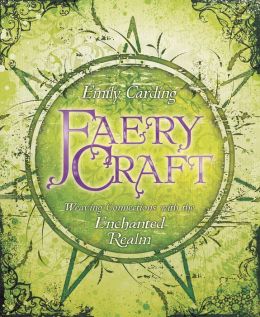
Faery Craft by Emily Carding


I'd like to share a few thoughts about  Faery Craft: Weaving Connections with the Enchanted Realm by Emily Carding, even though it's not a tarot book. It is actually related to my recent posts because 1) it is by the creator of the Tarot of the Sidhe (though the deck is not even mentioned in the book), and 2) it concerns faeries in general, in line with the two decks I've committed to working with over recent weeks: Tarot of the Sidhe and Faeries' Oracle.

This is the only book I've ever bought (or read) about faery. I bought it because it's by Emily Carding, whose work on Tarot of the Sidhe I so greatly admire. I don't know what to think about faery. Despite my interest in things esoteric, I am actually quite a hard-headed realist and skeptic. Some of you who also consider yourselves both a mystic and a skeptic might understand what a difficult position that sometimes can be! My spiritual path is quite earth-based, and I do not mess with otherworld realms much. I sense that something is 'flying around' out there (it's the best way I can think of to put it), but I feel no need to have any of those things turn their attention upon little old me. My workings are done with shields firmly up. In fact, I'm pretty sure my shields are up all the time, even when not needed. This is one reason I feel consideration of faery is good for my development. Another reason is that feeling I get when I venture out into the natural world, the feeling of a spiritual presence in the elements, and by that I don't mean the usual earth, water, fire, air, but also rivers, trees, rocks, and hills. Even a clearing or a fall of water into a tiny pool takes on the feeling of an entity to me. I want to greet them, honour them, admire them; there's something there, something more than just grass or moss or flowing water. And it's that feeling of spirit in the natural world that, to me, is the enchanted realm of faery. Forget little girls with wings (like the fairies at the bottom of the garden), or frog women wearing wreaths on their heads (like Brian Froud's illustrations), or slant-eyed wraiths with a dangerous edginess (Tarot of the Sidhe). Those are just individual artists' attempts to capture the feeling. That's not what the fae look like. Who knows what they look like. If they even look like anything. Artists famed for their depictions of faery agree on this point:

Monday, 11 February 2013

A Magick Life: A Biography of Aleister Crowley by Martin Booth

I started my One Deck Wonder with the Thoth Tarot at Imbolc (1st Feb), and decided after slogging around in DuQuette's guide book, and briefly dipping into a book on Qabbalah that I wanted to find out more about Aleister Crowley. I read a few reviews of the many books about him and settled on A Magick Life by Martin Booth, because I had read that it was relatively unbiased in its presentation, and gave equal weight to some of Crowley's other interests. In theory, Crowley had three passions in life: poetry, mountaineering, and magic. (In my opinion, they were actually himself, sex acts and the attempt to become a god). I believe that the author is a bit over-generous in his assessment of Crowley's writing talents. Apparently Crowley could have been an important mountaineer if not for the failings of his personality and his abysmal lack of PR skills. And then of course we have Crowley's magical career.

Having read this book, I can say that I find Aleister Crowley absolutely repugnant on every level. I believe he was a sociopath, in the textbook sense. I won't go into any details of his life to support this because, frankly, the thought wearies me. (Do check out the link. Crowley's life provides dozens of examples for each and every point listed in the definition of sociopath.)

A few impressions:

1) I found out where the pervading Bible imagery comes from -- his parents were involved in an extreme Protestant group called Plymouth Brethren, and as a child he was allowed to read only the Bible, thus his young imagination was peopled only by images from this source. He was never able to shake them. This also explains his strange obsession with rebelling against Christianity. (Had he been born in the modern era when no one cared what you believed, he could have ended up taking an entirely different path indeed. It wouldn't have been normal, but...)

Saturday, 22 December 2012

Book Review: Tarot for Your Future by Sandra Pendle

Sandra Pendle, Rochair Ltd, no date
I found this book at The Works last night for £1.99. I bought it because it features the Morgan Greer Tarot. It was shrink wrapped so I couldn't tell anything much about it until I got home.

It's an odd little thing (though not actually little, at 8.5 x 11.75 inches). The cover is a tri-fold, which has spreads printed on them, and then the actual book is on the left side, so when the whole thing is open, it takes up a lot of space:


 Tarot for Your Future features the author's personal style of creating a reading, which involves four very large card spreads:

Spread 1: Character cross, 14 cards
Spread 2: Relationships, 20 cards
Spread 3: Star of Work & Finance, 17 cards
Spread 4: Events Triangle (the future), 21 cards

These layouts are printed on the two right-side panels of the book, so that you may refer to them continuously whilst using the information contained in the spiral-bound pages to the left.


Sunday, 22 July 2012

Haindl Tarot: What's it all about?

'If suffering can have a creative meaning, Hermann Haindl's life and work were formed by it.'   ~ Erika Haindl
In my last post I mentioned I dislike Rachel Pollack's books about this deck. I should clarify by saying that in the past I've found them a bit frustrating, or did when I read them a few years ago upon buying my first Haindl Tarot deck. They seem as stream-of-consciousness as Haindl's paintings themselves, and that can be frustrating when you have come to a guidebook to make order of such complexity, only to find the explanations as abstract-random as the cards themselves. For me part of the problem is that each chapter starts with the Hebrew letters, runes, astrology, and/or I-Ching, and you have to skim past all this to get to the actual card images. For me this is a problem, as I do not like adding separate systems to tarot, and for me these are all unnecessary add-ons that get in my way! I have been dipping into them for the last couple of days and can say I still find them a little rambly--and think they could be offputting indeed to dewy-eyed tarot newbies--they are useful for gleaning insights into the artist's mindset and some of the curious elements of the cards.

If you're willing to plow through the detail and continuously remind yourself that these are Rachel Pollack's personal thoughts about these cards (sometimes with input from Haindl himself, but often just her own responses), the book can help with some of the more mysterious or curious elements on the cards, particularly with the majors. The books are not essential, though. When all is said and done, as deeply personal a tarot as this is, it is still a tarot, and if you bring to it Thoth/Golden Dawn interpretations (which can differ from contemporary RWS ones), it doesn't matter if you can interpret every single 'cosmic bubble' or cryptic reference to Wagner. It doesn't matter if you know Aleph from Tau, or what a tallis is.  You can still read with this deck.

And that's the important thing, because as Rachel Pollack points out in the introduction, the Haindl Tarot is not an occult deck, not in the sense of the Thoth et al. It is, as she points out, 'a sacred tarot, one which reaches back to ancient spiritual traditions and cultures...leading us to see the world as a vessel filled with spiritual power and truth' (Haindl Tarot: Major Arcana, New Page Books, 12).